
◆ Direct Answer
The design of a musical fountain in a city plaza must comprehensively consider five key factors: environmental compatibility (the size of the plaza and surrounding buildings), equipment selection (nozzles, pumps, lighting, and sound systems), artistic choreography (synchronization of music and water patterns), construction costs, and long-term maintenance. These five factors are interdependent; failure to give due consideration to any one of them will affect the fountain’s long-term performance and safety.
Introduction
City squares serve as central spaces for citizens“ daily activities and for showcasing the city’s image, and large musical fountains are often the most visually striking landmark features within these squares. However, a musical fountain is not simply a combination of ”pumps and nozzles”—every aspect, from scaling the fountain to the plaza’s dimensions and equipment selection to music choreography, budget control, and post-installation maintenance, directly impacts the final presentation, operational lifespan, and return on investment. For real estate developers and government procurement agencies, understanding these design factors in advance can help avoid rework and budget overruns as early as the project initiation stage.
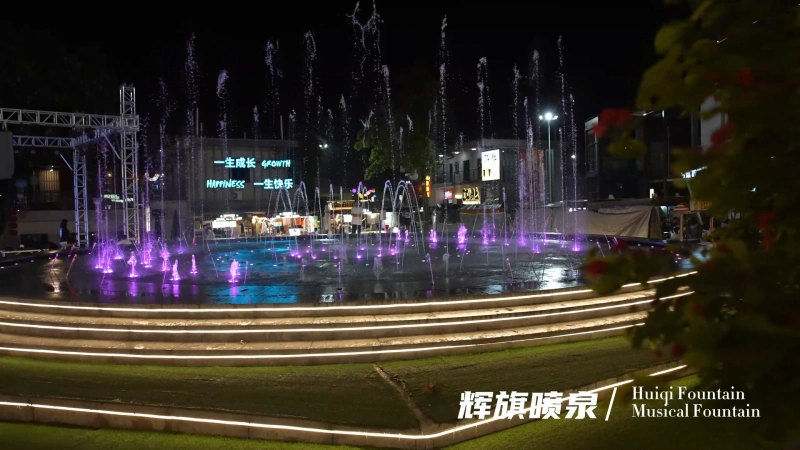
Why is it important to consider the plaza environment first when designing a fountain?
The spatial conditions of the plaza determine how large the fountain can be and what it should look like; this is the starting point of the design, not the details.
- Scale Matching:The size of the fountain should be in reasonable proportion to the area of the plaza; if it is too large, it will create a sense of spatial confinement, while if it is too small, it will appear out of proportion with the plaza. In rectangular plazas, fountains are typically placed at the center or along the long axis to enhance spatial orientation; in irregularly shaped plazas, the design must be adapted flexibly to the topography.
- Architectural Style Harmony:The style, height, and dominant color scheme of the surrounding buildings will, in turn, influence the design of the fountain—modern architectural complexes are well-suited to fountains with clean, simple lines, while traditional architectural complexes are better suited to water features that incorporate classical elements.
- Integration of the Human and Natural Environments:Transforming local cultural symbols and historical elements into fountain themes—such as music selection and the symbolic meanings of water patterns—can significantly enhance a project’s sense of cultural identity, which is also a key criterion frequently emphasized in the evaluation of government projects.
How should I select the right spray nozzles and water pumps?
Equipment selection is the cornerstone of a fountain’s visual appeal and operational stability, and it directly determines future failure rates and maintenance costs.
- Nozzle Type:DC nozzles produce a steady water flow with adjustable spray height, making them ideal for creating upright water forms; rotating nozzles can produce dynamic fan-shaped water curtains; and atomizing nozzles create a fine mist through high-pressure water flow, often used in conjunction with nighttime lighting effects. Large-scale projects typically employ a combination of various nozzles to achieve a range of effects, from static columnar water streams to dynamic curved water streams.
- Pump Specifications:Flow rate and head are key parameters that must be calculated comprehensively based on the fountain’s scale, desired jet height, and pipeline resistance—rather than simply following the “bigger is better” principle—as over-specifying these parameters will significantly increase energy consumption and equipment costs.
- Dual Control System:It is standard industry practice to use a variable frequency drive (VFD) in conjunction with a programmable logic controller (PLC). The VFD continuously adjusts the pump’s speed with rapid response, enabling real-time adjustments to the spray height; the PLC handles centralized control of multiple units and automated safety interlocks (such as water level abnormalities and wind protection). When used in combination, VFD systems typically save 40%–60% in energy consumption compared to fixed-speed pumps, which is highly significant for long-term operational cost control.
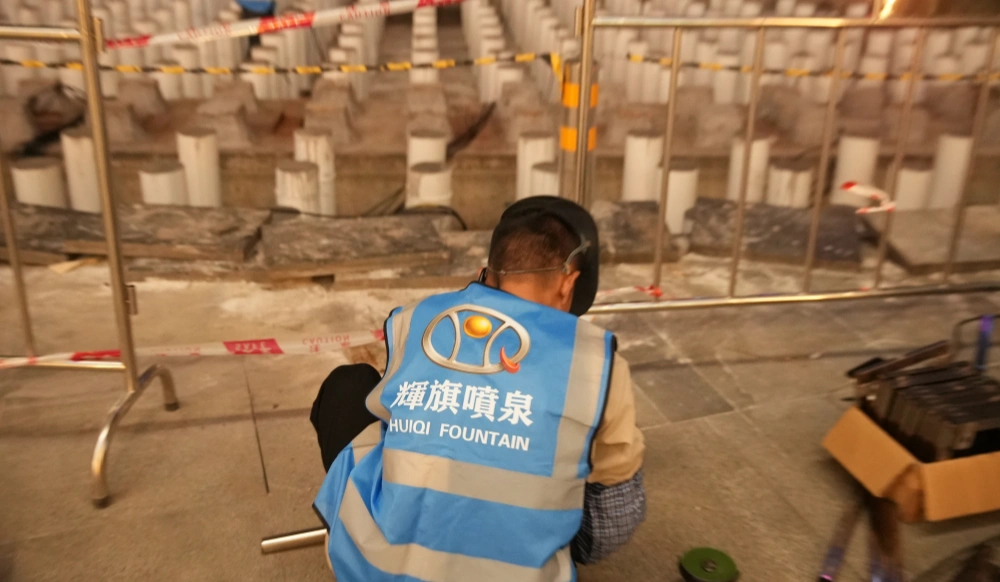
What is the best way to set up a lighting and sound system?
- Lighting Selection:LED lighting fixtures have become the industry’s mainstream choice due to their high brightness, low energy consumption, and long service life (approximately 50,000 hours, which translates to about 17 years based on 8 hours of daily use); they must also meet the IP68 waterproof rating (suitable for environments where the fixture is permanently submerged in water deeper than 1 meter), and typically operate at 12V or 24V DC to comply with electrical safety standards for public waterways.
- Lighting Methods:Direct lighting (where the light fixture is positioned close to the spray head to illuminate the water jet) is suitable for highlighting intricate water patterns, but it can cause the background to appear too dark; indirect lighting (where the light fixture is concealed along the pool’s edge and illuminates the water via reflection) is suitable for large-scale water features and creates a softer sense of depth.
- Audio System:Since plazas are open spaces, the required sound system power must be calculated based on a combination of the plaza’s area, crowd density, and ambient noise levels. Sound field simulations should be used to predict the coverage area in advance, thereby avoiding uneven sound distribution—where the sound is “strong at the center and weak at the edges.” Rectangular plazas typically use a linear array configuration, while circular plazas are better suited for a circular multipoint configuration.
What are the key considerations for music arrangement and water feature design?
- Music Genres That Match Different Scenarios:Classical music is well-suited for plazas with a rich cultural heritage; pop music is more effective at creating a lively atmosphere in commercial plazas; and folk music helps strengthen regional cultural identity and is often used in historical and cultural projects.
- Synchronizing Rhythm with Water Shapes:Fast-paced music is typically paired with high-pressure, high-frequency water patterns to enhance the visual impact; slow-paced music, on the other hand, is best suited for gentle, flowing water patterns that create a serene atmosphere. Synchronization accuracy depends on the coordination between PLC programming and sensors, and it serves as an important measure of the professionalism of a fountain control system.
- The Value of Flexible Control Systems:The ability to quickly adjust the music library and rearrange dance routines directly impacts operational flexibility down the line—many projects perform well during acceptance testing, but after six months of operation, when operators want to switch to a different program, they discover the system doesn’t support it. These are questions that should have been clarified during the design phase.
What are the main components of the construction cost for a large musical fountain?
- Equipment Purchase Costs:Nozzles, pumps, lighting, and sound systems are the main expense categories, and prices vary widely—high-pressure nozzles can produce complex water patterns but are more expensive. When selecting equipment, you should strike a balance between “desired effects” and “cost-effectiveness,” rather than blindly pursuing the highest specifications.
- Construction Costs:This includes civil engineering, utility installation, and equipment installation. Proper construction planning—such as conducting clash detection using 3D modeling in advance to reduce on-site rework—can effectively control the risks of schedule delays and cost overruns.
- Long-term maintenance costs:The industry standard is that annual maintenance costs typically amount to approximately 5%–10% of the equipment’s purchase price. While many buyers tend to overlook this factor during the project initiation phase, it is precisely the area where long-term operating budgets are most likely to exceed projections.
What maintenance issues should be addressed after a musical fountain is put into operation?
- Equipment Maintenance Intervals:It is recommended that frequently used components, such as spray nozzles and water pumps, undergo a comprehensive inspection and assessment every 2–3 years to detect issues such as aging seals and clogged outlets early on. The typical service life of a standard water pump is generally 8–12 years (for lift pumps) or 10–15 years (for dry-installed pumps), depending on the frequency of maintenance.
- Water Treatment:Circulating water systems must maintain pH levels within the standard range of 7.2–7.8 and residual chlorine levels within 1.0–3.0 mg/L (as per swimming pool water quality standards). Common treatment methods include physical filtration, chemical disinfection, and biological purification, which can be used individually or in combination.
- Safety Management:Electrical equipment must comply with grounding and protection standards, and warning signs and necessary guardrails should be installed around the fountain. In the event of a sudden power outage or similar situations, emergency response plans should be established and a public address system should be in place to guide visitors, thereby preventing safety risks associated with large crowds.
Frequently Asked Questions (FAQ)
Q1: What is the approximate budget for a large musical fountain on the scale of a city plaza?
The budget varies widely and depends primarily on the scale, spray height, complexity of the control system, and lighting and sound configurations, ranging from several hundred thousand to tens of millions of RMB. A specific quote can only be provided after developing a proposal based on the size of the plaza and the desired effects; it cannot be summarized with a single figure.
Q2: How long does it typically take from design to completion and commissioning?
A musical fountain project for a medium- to large-sized city plaza typically takes 3 to 6 months to complete, from conceptual design and equipment procurement to on-site construction and commissioning. The specific timeline depends on the scope of civil engineering work, the degree of equipment customization, and the approval process.
Q3: For government procurement projects, what specific considerations are there regarding fountain design?
In addition to standard design considerations, government procurement projects typically place a strong emphasis on safety management measures (electrical safety, slip resistance, warning signs), energy consumption metrics (whether variable-frequency energy-saving systems are used), and the integration of cultural themes—these are often key factors in the evaluation and scoring process.
Q4: What are the typical long-term maintenance costs for a fountain?
The industry benchmark is 5%–10% per year of equipment procurement costs, depending on the complexity of the equipment configuration, local water quality conditions, and maintenance frequency. It is recommended that this expense be included in the long-term operating budget during the project initiation phase, rather than being calculated solely as part of the construction-phase costs.
Q5: What is the approximate service life of fountain equipment?
There is significant variation in the service life of core components: LED fixtures last approximately 50,000 hours (about 17 years, based on an average of 8 hours per day); lift pumps last approximately 8–12 years; dry-mounted pumps last approximately 10–15 years; and high-frequency components such as sprinkler heads should be inspected and evaluated every 2–3 years. Overall service life is directly related to the quality of maintenance.
Huiqi Fountain
We specialize in the design, equipment manufacturing, and construction of large-scale musical fountains and water feature projects.
If you are evaluating musical fountain solutions for urban plazas, commercial properties, or government projects, please feel free to contact our engineering team for customized design recommendations and quotes.
Contact Information:18818738142
 Chinese
  English