
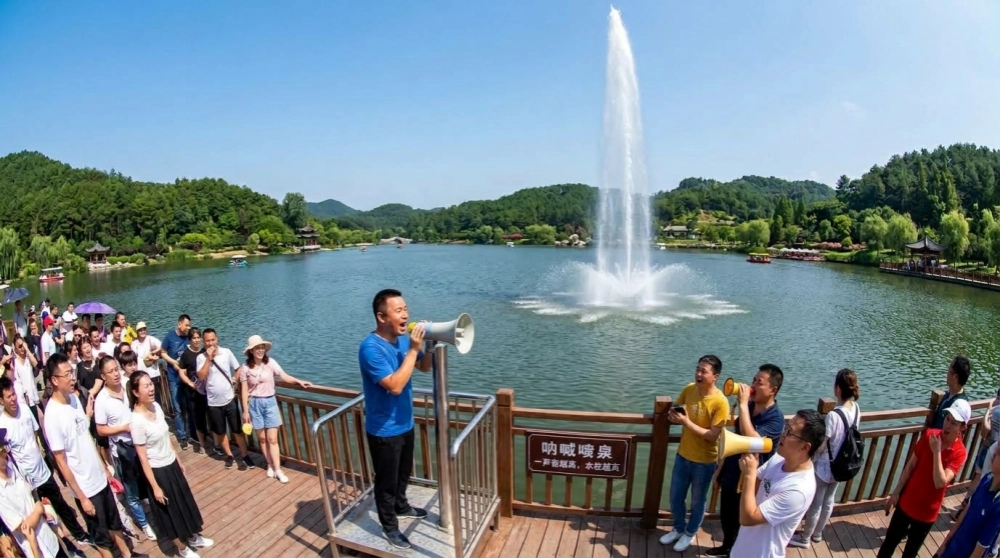
Water features in cultural and tourism projects are an integral part of the product itself: they must be capable of hosting performances, attracting crowds, serving as a reason for visitors to take photos and share them, and—ideally—driving nighttime spending. This determines the two core elements of a scenic area’s water features—entertainment value and reliability. A performance that suddenly falls apart is an incident that directly impacts a scenic area’s reputation and revenue—it is by no means a minor issue.
Founded in 2007 · Nanhai, Foshan · Projects spanning more than 50 countries
Three Distinctive Features of Cultural and Tourism Projects
There can be no mistakes in the performance.
Scheduled performances leave no room for unexpected malfunctions. Redundant design, maintenance-friendly structures, and rapid-response contingency plans are key investments that set scenic area projects apart from other settings.
High concentration of foot traffic
There is a sudden surge in foot traffic shortly before and after performances. Viewing areas, evacuation routes, and safety distances should be designed based on peak foot traffic, not average foot traffic.
There are significant seasonal fluctuations
There is a significant difference in operational intensity between peak and off-peak seasons, and scenic spots in northern regions must also factor in winter closures. Equipment selection and operation and maintenance plans should be based on the actual operating period of the park.
Recommended Water-Based Combinations
| Water-based | Why Is It Suitable for Cultural and Tourism Attractions? | Suggested Location |
|---|---|---|
| Musical Fountain | As the main attraction at tourist sites, these performances—which can vary in scale—are the core draw of the nighttime economy. They are typically combined with lighting, sound, and projections to create a complete show. | The Lake, Main Square |
| Water Screen Movie | It can play video content, making it suitable for thematic storytelling and cultural expression, and serves as an important tool for tourist attractions to differentiate themselves. | Lakes, open waters |
| Interactive Fountain | A popular photo spot for families and young people, it generates strong word-of-mouth buzz and is well-suited as a daytime activity. | Children's Area, Entrance |
| Waterfall Feature | Natural-style cascading water features that blend with the terrain and rocks are well-suited as scenic focal points along walking trails. | Tour Routes, Entrances |
Six Design Principles
Performance Reliability
Redundancy should be considered for critical equipment, and the control system should support fail-over rather than a complete system shutdown. Pre-performance self-check procedures and a list of spare parts should be established in advance.
Abortion Organizations
The capacity of viewing areas, evacuation routes, and safety distances must all be calculated based on peak crowd levels. Crowding during peak hours is, in itself, a safety risk.
Nighttime Effects
The peak viewing hours for the scenic area are at night, so the lighting design and water feature choreography should be tailored to the nighttime environment, rather than simply amplifying the daytime effects.
Wind Conditions
Strong winds over open water can affect the stability of the water curtain and the quality of the projection. The on-site wind conditions must be assessed before selecting a location and determining the design.
Seasonal Strategy
There are significant differences in operational intensity between peak and off-peak seasons, so scenic areas in northern regions need to plan for winter shutdowns and deactivation. Winterization strategies should be determined during the design phase to avoid retrofitting later on.
Content Update
Performance programs need to be updated regularly to maintain audience retention. When selecting a program, confirm whether the content is easy to organize and whether support from an external team is required.
Key Technical Specifications
| Parameter Items | Standard Configuration |
|---|---|
| Control Protocol | DMX512 / Art-Net, supports synchronized music and lighting choreography |
| Drive Type | Variable-frequency pump set; water jet height and rhythm are adjustable |
| Lighting Setup | RGB Underwater Light, IP68 Rating for Permanent Submersion |
| Underwater Light Materials | 316L / 304 Stainless Steel Housing |
| Show Updates | Supports switching between multiple programs via control software orchestration |
Frequently Asked Questions
Need a water feature design for a cultural and tourism attraction?
Provide details on the water or venue conditions, the scale of the performance, and the operational period, and we can provide a preliminary plan and equipment configuration.
Get a Proposal and Quote Chinese
 English