
A fountain nozzle is the end component that converts pressurized water flow into a specific water pattern; it directly determines what the fountain ”looks like.” Using the same pump and piping, simply replacing the nozzles can produce completely different water patterns. Huiqi Fountains has been manufacturing fountain equipment since 2007 and selects nozzles based on the desired water patterns, flow rate, head, and water quality conditions.
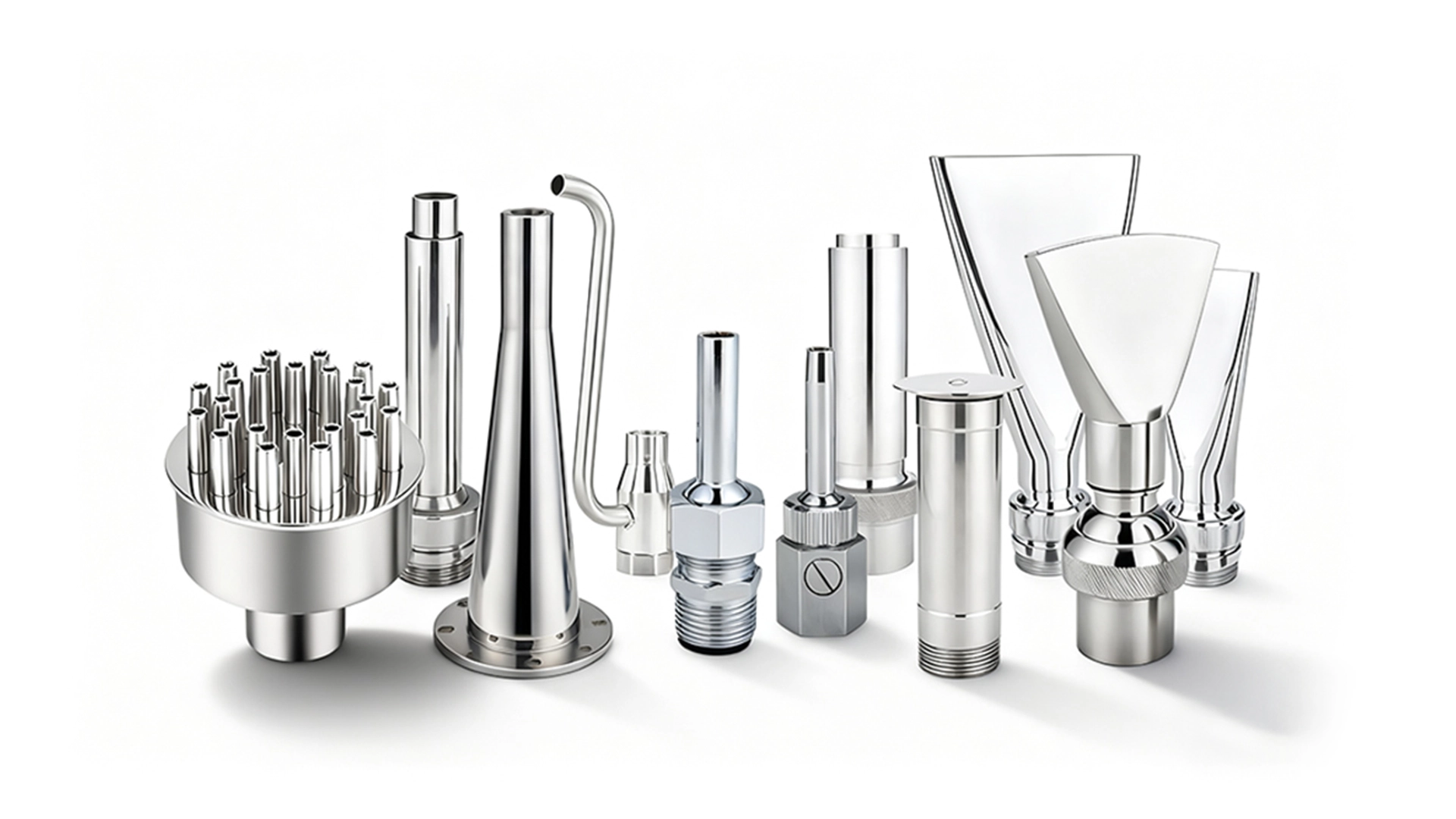
Founded in 2007 · Nanhai, Foshan · Projects spanning more than 50 countries
The Location of the Nozzles in the Fountain System
The fountain system can be divided into four sections:Power Source (Pump) → Delivery System (Pipes and Valves) → End Point (Sprinkler Heads) → Display System (Lighting and Controls). The nozzle is located at the end of the chain and serves as the link that ”translates” all the input from the preceding stages into a visual effect. It does not generate energy on its own but is solely responsible for converting the existing flow and pressure into a specific form; therefore, its selection must be considered as part of the overall system.
| Segment | Major Equipment | Relationship with the Nozzle |
|---|---|---|
| Power Train | Water Pumps, Variable Frequency Drives | Provide the flow rate and head to determine the nozzle's actual operating pressure. |
| Feed End | Pipes, Valves, Filters | A pre-filter determines whether the spray nozzle will become clogged with impurities. |
| End | Nozzle | Convert pressurized water flow into water patterns such as columns, mist, and films |
| Presentation Layer | Underwater lights, control system | Combined with water-based effects to create choreographed visual effects |
Common Nozzle Types and Water Pattern Characteristics
There is no standardized model naming convention for nozzles in the industry; they are typically classified based on the water patterns they produce. The following eight categories are the most commonly used in engineering projects, and the vast majority of fountain water patterns are created by combining them.
| Type | Characteristics of Water-Based Products | Common Applications |
|---|---|---|
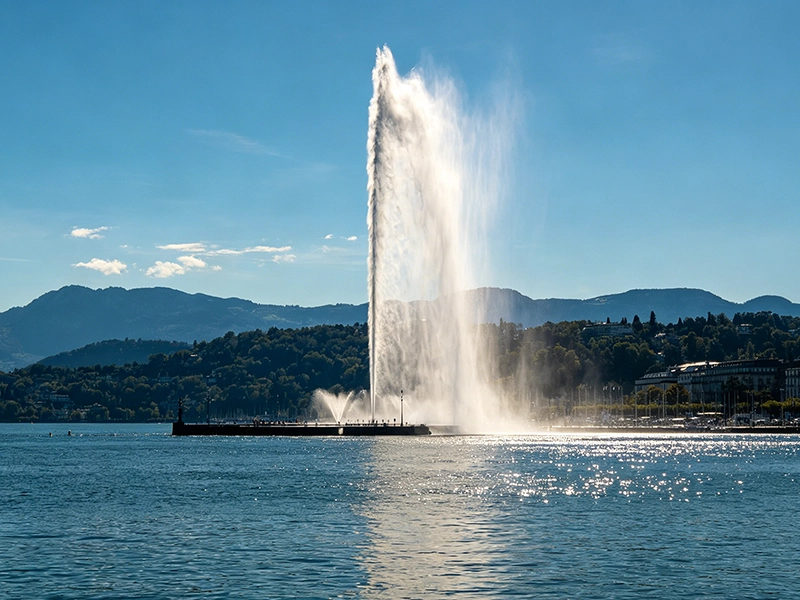
| DC Nozzle | A slender, upright column of water, with distinct edges and a highly concentrated height | Water Feature Array, Main Jet, High Jet, Dancing Fountain |
| Fountain Nozzle | A mound of water rising upward, soft and full, with no distinct edges | Mirror-like Pools, Hotel Lobbies, Courtyard Water Features |
| Fan-shaped nozzle | Flat fan-shaped water film, available in unidirectional, bidirectional, or full-circle configurations | Dry-spray array, perimeter enclosure of the plaza |
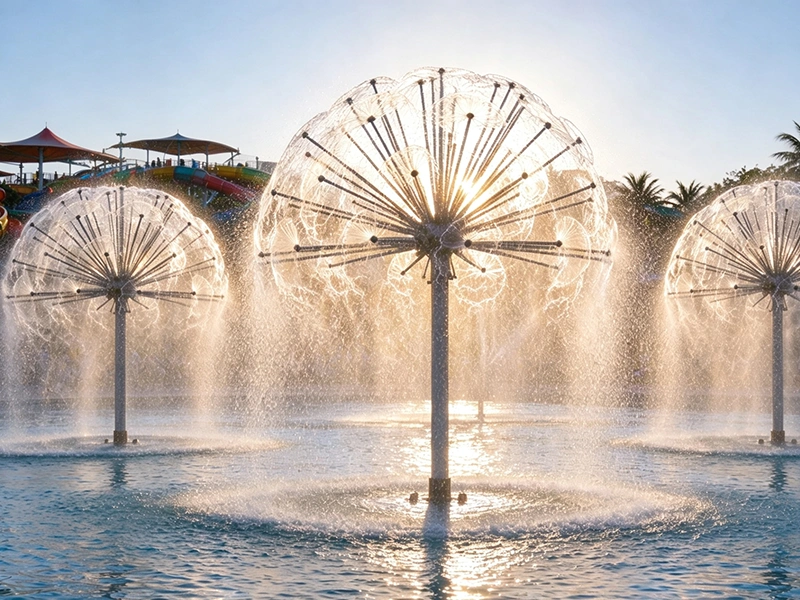
| Mushroom-shaped sprinkler head | A hemispherical or mushroom-shaped canopy that covers a large area | Children's Water Play, Landscape Ponds, Parent-Child Interaction |
| Atomizing Nozzle | An extremely fine water mist creates a "mist forest" effect, with the wind having a noticeable impact. | Cultural and tourism attractions, courtyard ambiance, and cooling needs |
| Rotating Nozzle | The water column rotates around an axis, forming a twisted or spiral shape. | Ornamental Water Features, Interactive Installations |
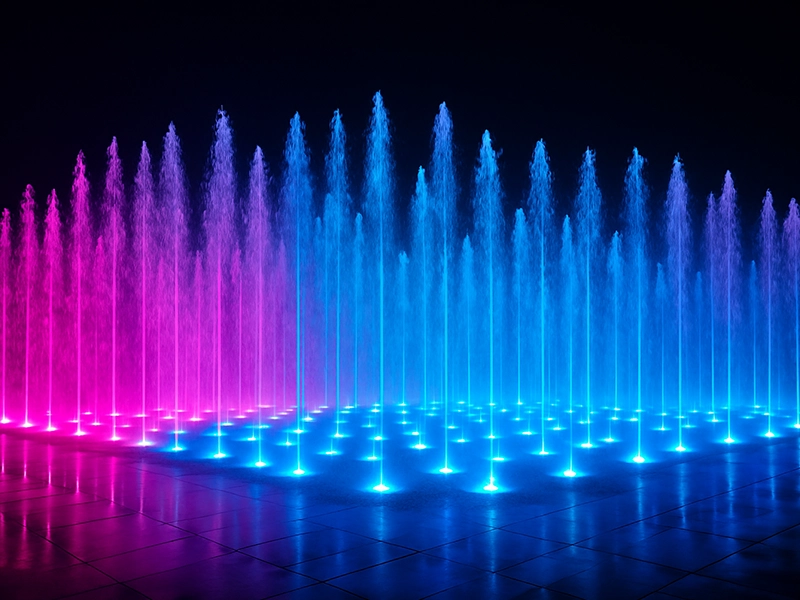
| Jumping Fountain Nozzle | The water jet pulsates in segments, allowing for precise control of the landing point and rhythm. | Digital Water Curtain, Programmable Show |
| Water Curtain Nozzle | A continuous curtain of water flows from top to bottom, emphasizing the smooth surface. | Water Feature Walls, Cascading Water Features, Indoor Waterfalls |
Key Considerations for Nozzle Selection
First, decide on the water type, then choose the nozzle.
The desired water pattern is the starting point for selecting a nozzle. First, determine whether you want a columnar, mist, or film pattern, and then work backward to select the appropriate nozzle type. Don’t let the equipment limit the desired effect.
Flow rate and head must be matched
The product of the number of spray heads and the flow rate per head must not exceed the pump's rated capacity, and frictional losses in the piping must also be factored in. This is the most common configuration error.
The diameter and piping must be compatible.
While the flow rate is maintained within the optimal range, a pipe diameter that is too small can result in insufficient pressure at the endpoints and uneven water jet heights.
Select the material based on water quality
For freshwater environments, 304 is usually sufficient; for seawater, high-chlorine, or hot spring water, choose 316L to prevent pitting corrosion and rust stains.
Layout Density and Mutual Interactions
Leave sufficient space between adjacent water columns; otherwise, mutual interference will cause the water patterns to spread out and blur their edges.
Provide access for maintenance
Each sprinkler head must be replaceable individually. The locations of the access panels must be determined during the design phase; do not wait until after construction is complete to cut openings.
Key Technical Specifications
| Parameter Items | Standard Configuration |
|---|---|
| Material | 304 / 316L stainless steel; select the appropriate type based on water quality and project grade |
| Connection Methods | Threaded or flanged, commonly available in sizes DN15–DN100 |
| Traffic per unit | 0.5–50 m³/h, determined by model and water type [Check specific model] |
| Work-related stress | Typical range: 0.05–0.4 MPa; varies significantly depending on the water type [Check specific model] |
| Surface Treatment | Polished or brushed, depending on the required level of detail for the landscape |
| Custom-Made Non-Standard Products | We offer custom mold manufacturing for irregularly shaped nozzles to meet specific water-based requirements. |
For items marked [Verify], please replace them with the data from the product specifications.
Common Issues and Solutions
| Phenomenon | Possible Causes | Approach |
|---|---|---|
| Water-based, spreads out but doesn’t set | Insufficient operating pressure or wear on the nozzle core | Check the pump pressure and replace the nozzle insert |
| The water column is not high enough | Insufficient flow, or excessive frictional losses in the piping | Review the head selection and, if necessary, increase the pipe diameter. |
| No water comes out of the spray nozzle | Blockage caused by impurities or scale | Clean the pre-filter and spray nozzles to improve filtration efficiency |
| Water-Type Deviation | The nozzle is not installed vertically, or the base is warped | Recalibrate the horizontal and vertical alignment of the installation |
| Rust spots on the surface | The material grade does not match the water quality. | Replace with 316L or a higher-grade material |
| Interface Leakage | Seals have deteriorated or are not properly secured | Replace the O-ring and retighten to the specified torque. |
Related Water-Based Types
Supporting Equipment
Frequently Asked Questions
Further Reading
Need advice on selecting a printhead?
Provide the target water type, flow and pressure conditions, and water quality information, and we can offer recommendations on sprinkler configuration and selection.
Get a Proposal and Quote Chinese
 English