
Components are the most inconspicuous yet most frequently replaced parts of a fountain. Nozzles, pumps, and lights determine how attractive a fountain looks, while piping, valves, filters, and seals determine whether it can operate stably over the long term. Opting for accessories of a lower grade in terms of material and specifications often results in exponentially more repairs down the line. Huiqi Fountains has been manufacturing fountain equipment since 2007 and provides complete sets of accessories as well as original manufacturer spare parts support.
Founded in 2007 · Nanhai, Foshan · Projects spanning more than 50 countries
Location of Components in a Fountain System
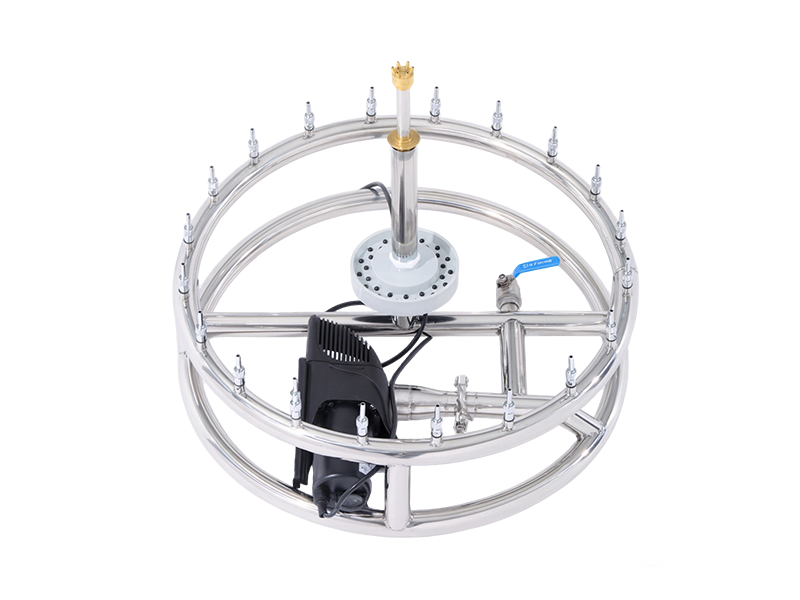
Accessories ThroughoutFeed End and Protection End: Piping delivers water from the pump to each nozzle; valves control distribution and isolate sections for maintenance; filters trap impurities; and electrical components ensure the safety of underwater equipment. While they do not directly produce visual effects, they form the foundation of the system’s reliability—the vast majority of fountain malfunctions can ultimately be traced back to one of these components.
| Segment | Main Components | Role in the System |
|---|---|---|
| Feed End | Stainless steel pipes, flanges, elbows, and couplings | Distributing flow to each nozzle determines the frictional loss |
| Control End | Gate Valves, Butterfly Valves, Check Valves, Solenoid Valves | Regulate flow, prevent backflow, and isolate the system for maintenance |
| Water Quality Endpoint | Filters, Hair Collectors, Chemical Dosing Systems | Traps impurities and protects the spray nozzle and water pump |
| Protection End | Waterproof Cables, Junction Boxes, Ground Fault Circuit Interrupters | Ensuring the Long-Term Safe Operation of Underwater Electrical Equipment |
Major Parts Categories
They are divided into five categories based on function. In engineering projects, they are typically supplied as complete, integrated packages to avoid mixing specifications and materials from different batches or manufacturers, which could create potential problems for future maintenance.
| Category | Major Components | Function |
|---|---|---|
| Pipes and Fittings | Stainless steel pipes, flanges, elbows, tees, and couplings | Conveys and distributes water flow, forming the backbone of the system |
| Valve | Gate Valves, Butterfly Valves, Check Valves, Solenoid Valves | Flow Regulation, Backflow Prevention, Group Control, and Maintenance Isolation |
| Filtration and Water Quality | Pre-filter, hair trap, chemical dosing and disinfection system | Traps impurities and hair; inhibits algae growth and scaling |
| Electrical and Safety | Waterproof cables, junction boxes, waterproof connectors, protective components | Underwater Power Supply Safety and Signal Stability |
| Wear Parts | Seals, spray nozzle inserts, lamp gaskets, mechanical seals | Regular replacement determines whether the system can operate stably over the long term. |
Key Considerations for Selecting Components
Pipe diameter is calculated based on flow velocity, not on empirical estimates.
Keep the flow rate within the optimal range. If the pipe diameter is too small, it will result in insufficient pressure at the end points and uneven water jet heights, which will be difficult to correct later on.
The material is the same as that of the main unit.
The materials used for pipes and valves should be of the same grade as those used for the spray heads and pumps. Using lower-grade materials together can cause galvanic corrosion, with the joints being the first to fail.
The filtration precision must match the spray nozzle.
The filtration precision must be finer than the smallest flow passage in the nozzle; otherwise, clogging is inevitable. In locations with poor water quality, the filtration grade should be increased.
Valves must be capable of isolating groups
Maintenance valves are installed by zone, allowing for the isolation and repair of a single-unit failure without having to shut down the entire system and drain it.
Don't Skimp on Submarine Cables and Connectors
Underwater joints are the most common points of failure. Specialized waterproof connectors and waterproof cables must be used, and the joints must be sealed in accordance with specifications.
Keep a stock of wear-and-tear parts
Seals, spray nozzle inserts, and mechanical seals should always be kept in stock. While these parts have a low unit price, the cost of downtime is high, so waiting until they break before purchasing them is the least cost-effective approach.
Key Technical Specifications
| Parameter Items | Standard Configuration |
|---|---|
| Pipe Material | 304 / 316L stainless steel; a higher grade is required for seawater environments |
| Common Calibers | DN15–DN300, determined based on flow rate and velocity calculations |
| Connection Methods | Flanges, threads, or grooves, determined based on diameter and maintenance requirements |
| Filter precision | Determined based on the nozzle’s minimum flow passage; increase the rating when water quality is poor [Check specific configuration]. |
| Valve Types | Gate valves and butterfly valves are used for isolation during maintenance, while solenoid valves are used for group control. |
| Electrical Protection | Waterproof cables are equipped with special waterproof connectors, and the circuits are protected by ground-fault circuit interrupters. |
For items marked [Verify], please replace them with the data from the product specifications.
Common Issues and Solutions
| Phenomenon | Possible Causes | Approach |
|---|---|---|
| Uneven height at the ends of the water-filled sections | Pipe diameter is too small or there is an imbalance in branch line resistance | Verify the hydraulic balance, install a balancing valve, or adjust the branch pipes. |
| Frequent nozzle clogs | Insufficient filtration efficiency or uncleaned filter screen | Improve filtration precision and shorten cleaning cycles |
| Leak at the joint | Seals have aged or are not properly secured during installation | Replace the seals and retighten to the specified torque. |
| The valve does not close tightly | Wear on the valve spool or blockage caused by debris | Disassemble, inspect, and clean; replace the valve core or the entire valve if necessary |
| Water Entering the Underwater Connector | Improper selection of waterproof connectors or inadequate sealing procedures | Replace the specialized waterproof connector and reseal it. |
| Noises and Vibrations in Piping | Excessive flow rate or loose pipe clamps | Calculate flow velocity; reinforce pipe clamps and brackets |

Related Water-Based Types
Supporting Equipment
Frequently Asked Questions
Further Reading
Need a parts list or replacement parts?
Please provide details about the project and its years of operation, and we can provide a parts list and recommendations for stocking wear-and-tear parts.
Get a Proposal and Quote Chinese
 English