
◆ Direct Answer
Common methods for treating fountain water include four main categories: physical and mechanical filtration, UV and high-voltage electrostatic disinfection, chemical treatment, and ecological bioremediation. Typically, a combination of these methods is required, along with routine inspections, water replenishment, and freeze protection maintenance, to ensure that fountains remain clear and operate reliably over the long term.
Introduction
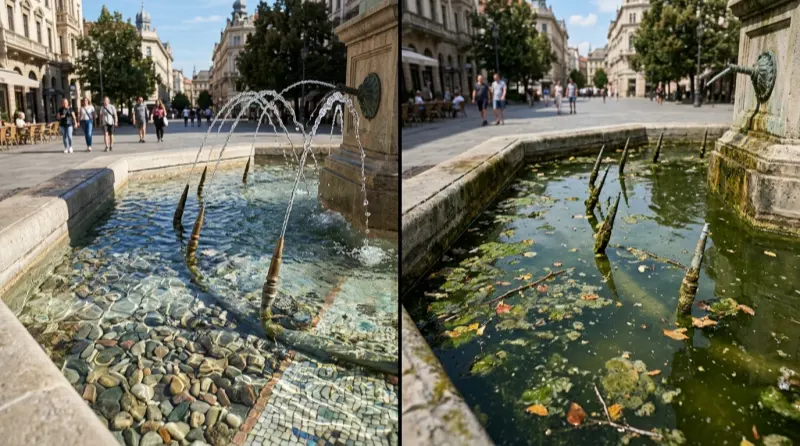
As an integral part of urban landscapes and garden water features, the clarity of a fountain’s water and its proper functioning directly impact the viewing experience. Due to prolonged exposure to the outdoors, fountains are highly susceptible to contamination from dust, fallen leaves, algae, and microorganisms; therefore, water quality treatment is a critical aspect of fountain projects that cannot be overlooked, from construction through long-term operation. To maintain clear water quality and ensure the proper functioning of equipment, it is essential to implement scientifically sound water treatment methods and strictly adhere to daily maintenance routines; both are indispensable.
Why is it necessary to use a combination of methods for fountain water treatment?
It is difficult to address the complex water quality issues faced by fountains using a single method; the industry typically employs a combination of physical, chemical, biological, and ecological approaches to maintain the water body’s self-purification capacity and transparency. Physical methods address issues related to suspended particles and oxygen levels, while chemical methods tackle excessive algae and microbial growth; ecological methods, in turn, fundamentally enhance the water body’s long-term self-regulatory capacity. These three approaches complement rather than replace one another.
How exactly are physical and mechanical filtration carried out?
Physical filtration is the most fundamental step in water treatment and the one that takes effect first.
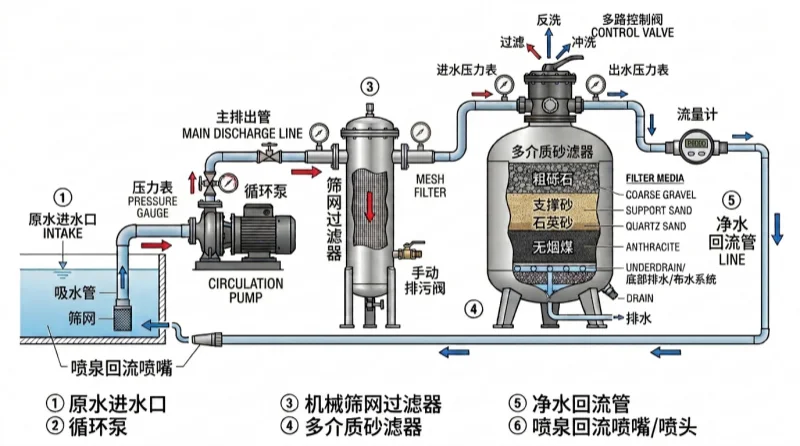
- Filtering and Blocking: Installing mesh filters or gravel-bed filters in a water circulation system can effectively trap suspended particles such as silt and leaves in the water, making it the most direct method for controlling water turbidity.
- Natural Aeration: Using the waterfall created by the fountain itself for aeration not only promotes mixing between the upper and lower layers of water but also increases the concentration of dissolved oxygen in the water, thereby inhibiting the release of nitrogen and phosphorus from bottom sediments and preventing the water from turning black and developing an unpleasant odor.
What are the principles behind ultraviolet and high-voltage electrostatic sterilization technologies?
For water bodies that are not in operation or require thorough purification, physical disinfection methods are less likely to cause secondary pollution than chemical treatment.
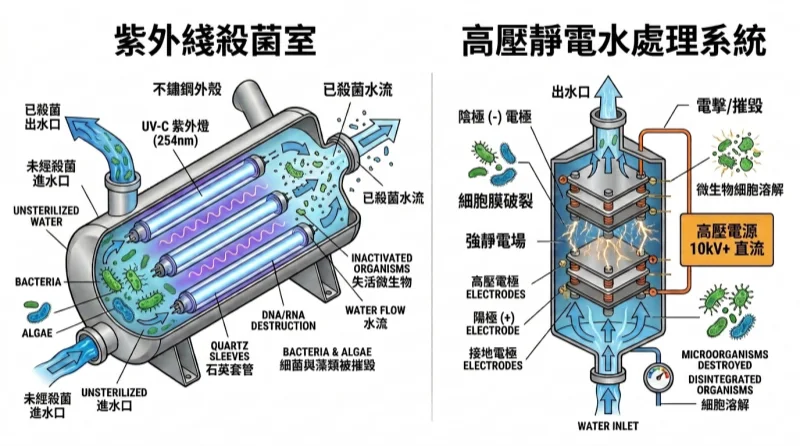
- Ultraviolet Sterilization: It is a quick and environmentally friendly physical disinfection method that does not contaminate the water, making it suitable for use during fountain downtime or in situations where water quality standards are particularly high.
- High-Voltage Electrostatic Technology: Electromagnetic pulse high-voltage ion technology generates reactive oxygen species under the influence of a high-voltage electrostatic field, which disrupts the ion channels and photosynthetic capacity of bacteria and algae, thereby achieving an environmentally friendly bactericidal and algicidal effect; it is a non-chemical treatment method that has gradually gained widespread adoption in recent years.
What should be considered when using chemical agents to adjust water quality?
Chemical methods produce quick results, but if used improperly, they can easily lead to new problems.
- Disinfection and pH Adjustment: To address algal blooms caused by water eutrophication, disinfectants such as sodium hypochlorite can be added in appropriate amounts, or the pH can be adjusted when the water is too alkaline to prevent the growth of green algae. Public fountains generally need to adhere to swimming pool water quality standards, maintaining a pH level between 7.2 and 7.8 and keeping residual chlorine within the range of 1.0–3.0 mg/L.
- Dose-Related Risks: The use of chemical agents must be strictly controlled to ensure that residual chlorine levels meet standards and do not cause secondary pollution to the surrounding environment. Excessive use not only increases costs but may also corrode equipment or irritate the skin of people who come into contact with it.
How does ecological restoration help improve the water quality of fountains?
Ecological approaches take longer to show results, but they are long-term solutions that fundamentally enhance the self-purification capacity of water bodies.
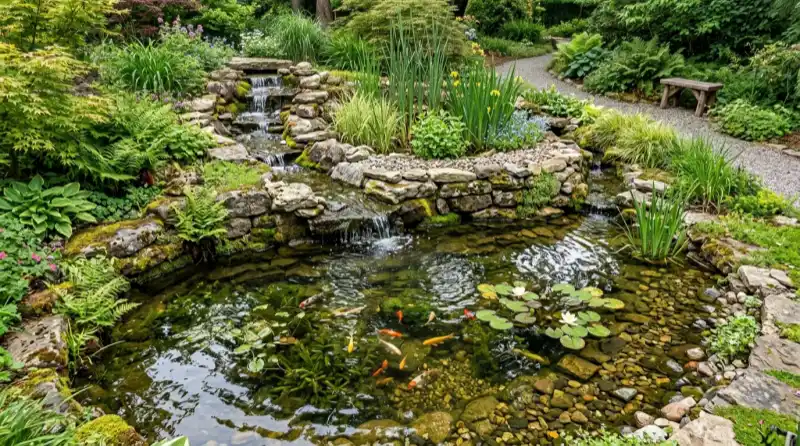
- Building Biodiversity: In large landscape fountains, micro-ecosystems can be created by introducing aquatic animals such as fish, clams, and snails, or by planting aquatic plants, thereby enhancing the water body’s ability to self-regulate.
- Biological Filtration: Biological filters utilize beneficial bacteria to break down organic matter in water, fundamentally improving water quality. They serve as an important supplement to physical and chemical methods and are particularly well-suited for projects requiring long-term operation that aim to reduce reliance on chemical treatments.
What tasks are involved in the daily maintenance of a fountain?
Regular, standardized maintenance is key to extending the service life of a fountain and reducing the incidence of future malfunctions. The core points of this maintenance focus on four areas.
- Regular Inspections and Cleaning: Establish a daily inspection routine, focusing on checking the operating noise of the pump, as well as the motor temperature and voltage stability; Use a fine-mesh skimmer to remove debris from the water surface daily; use a soft brush and clean water to rinse the spray nozzles and the pool surface weekly; Thoroughly clean the pump filter screen and change the pool water monthly to prevent scale and algae buildup.
- Water Level Monitoring and Replenishment: Outdoor fountains are subject to high temperatures and strong winds, causing water to evaporate quickly. It is essential to maintain the water level above the pump’s intake to prevent the water level from dropping too low, which could cause the pump to run dry, overheat, or even burn out. When refilling the water, use filtered or distilled water whenever possible to minimize the formation of scale in the pipes caused by minerals in tap water.
- Equipment Lubrication and Anti-Freeze Maintenance: Apply grease to the pump bearings and gearbox gears every quarter to reduce wear; In regions with severe winter cold, before taking the system out of service, thoroughly drain all water from the pool and any residual water from the pipes, and move the pump indoors or insulate it to prevent freezing and expansion from causing cracks in the pool structure or damage to the equipment.
- Coordinated Management of the Surrounding Landscape: Prune the trees and shrubs around the fountain regularly to prevent fallen leaves and dead branches from falling into the pool; Avoid applying fertilizer near the fountain to prevent rainwater from washing nutrients into the pool and exacerbating water eutrophication.
What long-term costs can result from inadequate water treatment?
Many project owners tend to view water quality treatment as a minor matter during the “operational” phase, but in reality, it directly affects equipment lifespan and annual maintenance budgets. Long-term failure to meet water quality standards accelerates nozzle clogging, pump scaling, and pipe corrosion, shortening the equipment replacement cycle; The industry generally estimates that annual fountain maintenance costs amount to approximately 5%–10% of the equipment’s purchase price, and inadequate water treatment is often one of the main causes of cost overruns in this area. Planning a water treatment solution in advance is far less costly than implementing remedial measures after the fact.
Frequently Asked Questions (FAQ)
Q1: How often should fountain water be treated?
The frequency varies by task: Removing surface scum is recommended daily; cleaning the spray nozzles and tank is recommended weekly; thoroughly cleaning the filter screen and changing the water is recommended monthly; and lubricating and maintaining the equipment is recommended quarterly. The specific frequency should be adjusted appropriately based on local climate and water quality conditions.
Q2: Can tap water be used directly in the fountain? Do I need to add any chemicals?
Tap water can be used to replenish the water supply; however, fountain water that is recirculated over the long term is prone to algae growth due to evaporation-induced concentration and the accumulation of external contaminants. It is recommended to add disinfectants in appropriate amounts based on water quality monitoring results, or to use supplementary treatment methods such as ultraviolet (UV) disinfection or ecological restoration. It is not recommended to completely forego any water quality management.
Q3: What should I do if the water in my fountain turns green and starts to smell bad?
Water turning green is usually caused by excessive algae growth, while foul odors are often related to the anaerobic decomposition of bottom sediments. Algae and bacteria can be controlled using UV disinfection or high-voltage electrostatic technology, while increased aeration can improve water quality at the bottom of the pond. In severe cases, the pond must first be thoroughly cleaned, and some of the water replaced.
Q4: Should water be drained from fountains in winter? How can they be protected from freezing?
Before shutting down fountains in extremely cold regions, it is essential to completely drain the water from the basin and any residual water from the pipes, and to move the water pump indoors or insulate it properly, to prevent cracking of the basin or damage to equipment caused by freezing and expansion. This is the most easily overlooked yet most serious step in winter maintenance.
Q5: Does fountain water treatment require a professional? Can I maintain it myself?
Routine tasks such as skimming, cleaning, and checking water levels can be performed independently by on-site personnel in accordance with established procedures; however, for tasks involving chemical dosing ratios, equipment maintenance and repair, and ecosystem development, it is recommended that a professional team be engaged to prevent water quality deterioration or equipment damage caused by improper operation.
Huiqi Fountain
We provide design services for fountain water treatment solutions and supply the necessary equipment, as well as long-term maintenance support for various landscape fountain projects.
If you are planning a water treatment or maintenance program for a fountain project, please feel free to contact our engineering team for advice and a quote.
Phone number:18818738142
 Chinese
  English