
◆ Direct Answer
Large-scale fountain projects typically go through five core phases from design to completion: preliminary planning and site surveys; detailed design and system programming; foundation construction and equipment installation; system integration testing and fine-tuning; and final acceptance, commissioning, and handover for operations and maintenance. These five phases build upon one another, and rushing any single step will affect both the final presentation and long-term operational stability.
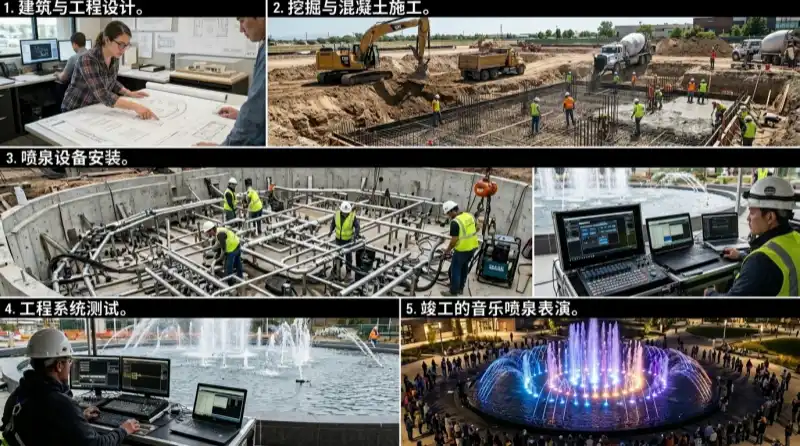
Introduction
Large-scale fountain projects are often regarded as the crowning touch of urban public spaces. Not only do they integrate diverse elements such as water, light, sound, and electricity, but they also represent a complex systems engineering project that combines aesthetics, architecture, mechanics, and hydraulics. Transforming a grand blueprint into a breathtaking water dance show in reality requires project teams to coordinate multiple phases, including design, civil engineering, equipment installation, and commissioning. Gaining an early understanding of the complete implementation phases of a large-scale fountain project helps developers and procurement teams establish reasonable timeframes and budget structures from the project initiation stage.
Phase 1 of a Large-Scale Fountain Project: What Needs to Be Done During Preliminary Planning and Site Surveys?
The project begins with an in-depth analysis of the site and the requirements.
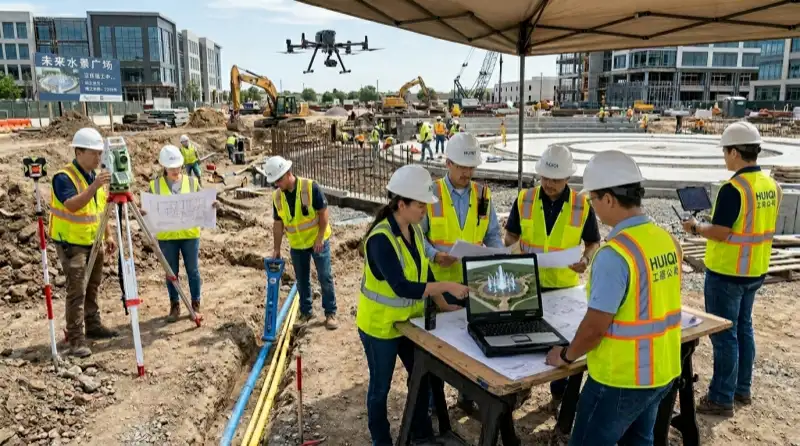
- On-site Inspection: The design team must first conduct a thorough site survey to assess the topography, soil conditions, wind direction, and the capacity of existing water and power supply facilities in the proposed construction area.
- Clear Requirements: It is essential to clearly define the project’s core purpose (such as cultural and tourism night tours, urban landmarks, or community engagement) and budget range, as this step determines the direction of subsequent design proposals and sets the upper limits on specifications.
- Conceptual Designs and Visualizations: Based on this, the designer will develop a preliminary conceptual proposal tailored to the site’s characteristics and use 3D simulation software to visualize the water flow dynamics, lighting colors, and musical effects. This allows the designer to confirm the overall direction with the client before construction begins, thereby avoiding major adjustments after construction has started.
What specific tasks are involved in the detailed design and system programming phases?
Once the conceptual design was approved, the project moved into the phase of transforming the concept into engineering drawings.
- Construction Drawings and Hydraulic Calculations: Engineers must produce extremely detailed construction drawings that specify the exact locations and routing of every spray head, underwater LED light, pump, and electrical panel, while also performing professional hydraulic calculations to ensure that the pump head and pipe diameters meet the requirements of various complex water features.
- Control System Programming: For musical fountains, programming the control system is the heart of this phase. Programmers analyze each frame of the musical track and precisely synchronize the water patterns and lighting effects with the rhythm of the music; the amount of work involved in this process directly determines the synchronization accuracy of the final performance.
What are the key steps in the foundation construction and equipment installation phase?
The construction phase involves collaboration among multiple trades, and the quality of the civil engineering work directly determines the fountain’s long-term service life.
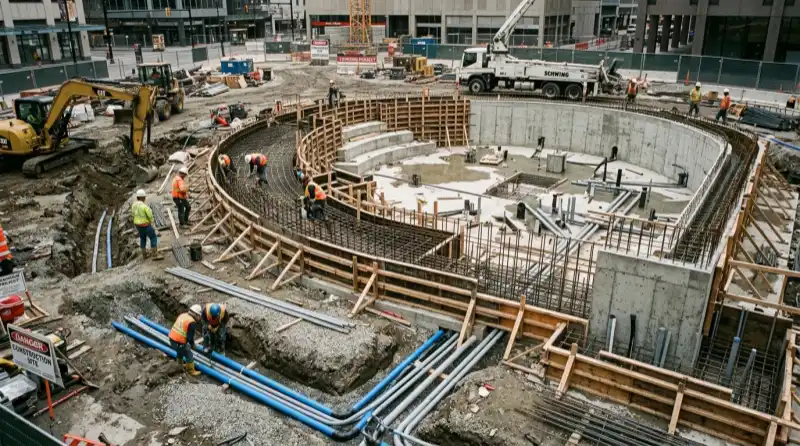
- Basic Civil Engineering: The construction team must perform earthwork excavation and foundation treatment, pour the high-strength reinforced concrete structure for the basin, and then conduct rigorous waterproofing and leak-proofing tests—this is the cornerstone of ensuring the fountain’s long-term, stable operation.
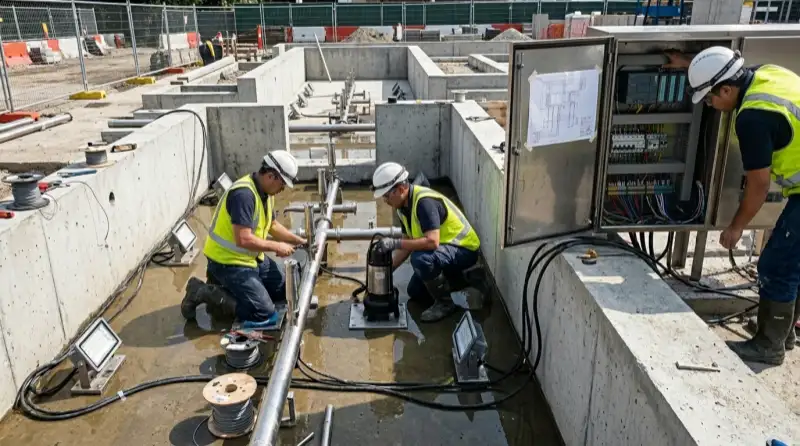
- Equipment Installation: Once the equipment installation phase begins, workers must lay water supply lines and electrical wiring, and install various spray nozzles, underwater lights, water pumps, and the central control cabinet. They must strictly adhere to safety regulations for building electrical systems and water feature projects to ensure that the insulation and waterproofing of all underwater equipment meet the highest standards.
Why Can’t System Integration Testing and Fine-Tuning Be Omitted?
Once the equipment is installed, the fountain will not immediately function perfectly; this phase is often the most underestimated part of the project timeline.
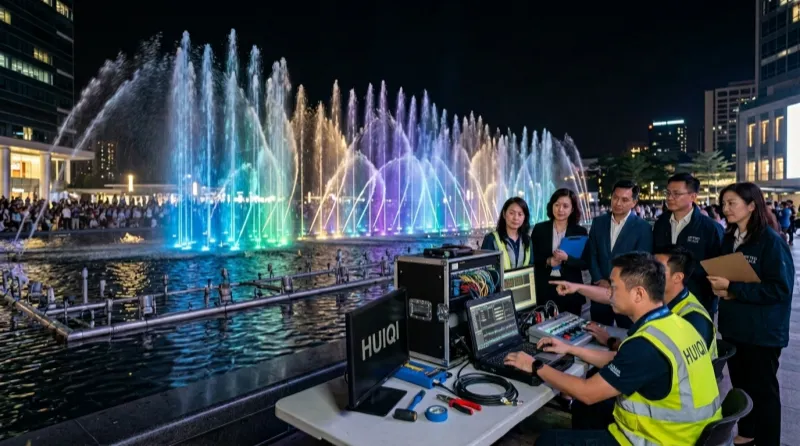
- Subsystem Testing: Technicians will first conduct independent tests on subsystems such as pumps, lighting, and sound systems to rule out basic malfunctions and ensure that no potential issues carry over into the overall system integration testing.
- Comprehensive Integrated Testing: This is followed by comprehensive integrated testing, during which water is repeatedly added and the system run to fine-tune the angle of each nozzle, the water pressure, and the brightness of the lights. In music fountain projects, programmers also make secondary adjustments to the control program based on real-time water flow feedback to ensure that the water patterns perfectly synchronize with the musical notes, until the overall performance achieves the intended artistic effect.
What should be kept in mind during the final inspection and handover for operations and maintenance?
A project does not end once equipment commissioning is complete; only through proper acceptance and handover can long-term, stable operation be ensured.
- Acceptance Testing: Once the fountain system has been operating continuously and stably and has met the design standards, it enters the acceptance phase. In addition to internal quality and functional testing, a third-party quality inspection agency is typically invited to conduct a comprehensive assessment of water quality, energy consumption, and safety.
- Operations Handover: Upon successful acceptance, the contractor will formally hand over the project to the operations team, provide a complete set of equipment manuals and maintenance guides, and conduct professional training for operations and maintenance personnel on operation and maintenance procedures, guiding them in daily water quality management, equipment inspections, and winter freeze protection measures.
How long does it typically take for a large-scale fountain project to go from project approval to completion?
The project timeline varies significantly depending on the scale and complexity of the project, so there is no standard timeframe. Small- to medium-sized fountain projects typically take several months from design to completion; For landmark-level projects involving large musical fountains, complex control system programming, or extensive civil engineering work, the full cycle often takes between 6 months and over a year, depending on the approval process, the degree of equipment customization, and on-site construction conditions. Allowing ample time for design and commissioning in advance is key to avoiding project delays and rework.
Frequently Asked Questions (FAQ)
Q1: How long does it typically take to complete a large-scale musical fountain project, from design to completion?
Project timelines vary widely; small- and medium-sized projects may be completed in a matter of months, while landmark projects involving complex control system programming and large-scale civil engineering work typically take between 6 months and over a year, depending on the approval process, the degree of equipment customization, and on-site conditions.
Q2: What do project teams most often overlook during the initial planning phase?
The most commonly overlooked factors are whether the capacity of existing water and power supply facilities meets the project’s needs, as well as the impact of site conditions—such as wind direction and topography—on the fountain’s performance. If these factors are not thoroughly assessed during the preliminary survey phase, problems often only come to light during construction, resulting in rework.
Q3: How long does the system debugging phase typically take?
The duration of the commissioning process depends on the size of the fountain and the complexity of the control system. Simple projects may take only a few days, but large musical fountain projects involving music-synchronized programming typically require repeated filling and operation, as well as fine-tuning of nozzle angles and control programs, so the commissioning period may last several weeks.
Q4: After the fountain project is completed, what does the handover of operations and maintenance entail?
This typically includes the handover of a complete set of equipment manuals and maintenance manuals, as well as training for operations and maintenance personnel on operation and maintenance procedures. The training covers daily water quality management, equipment inspection procedures, and key points for winter freeze protection, ensuring that the operations team can independently perform subsequent routine maintenance.
Q5: At what stage should the budget for a large-scale fountain project be determined?
It is recommended to establish a budget range during the initial planning phase and prepare a preliminary estimate based on the results of the site survey and the conceptual design. Once the detailed design phase begins, the budget will become more precise as the construction drawings and hydraulic calculations are refined; however, the core budget framework should be largely finalized before construction begins.
Huiqi Fountain
We provide a full range of one-stop services, from design consulting, 3D visualizations, equipment manufacturing, and on-site installation to long-term maintenance. With 18 years of engineering experience, we have delivered fountain projects in more than 50 countries worldwide.
If you are planning a large-scale fountain or musical fountain project, please feel free to contact our engineering team for design recommendations and a quote.
Phone number:18818738142
 Chinese
  English