
◆ Direct Answer
The PLC handles the logical control of the fountain system (starting and stopping pumps, operating solenoid valves, and sequence timing), while the DMX system controls the color, brightness, and flashing of the lights. The two systems achieve real-time data synchronization through communication interfaces such as RS-485 and data exchange protocols, working together to ensure precise coordination between the fountain’s water patterns, lighting, and music.
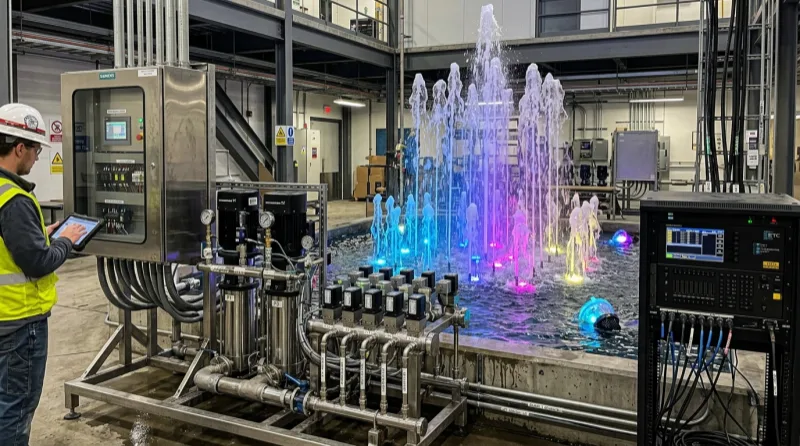
Introduction
Early fountain control systems relied primarily on the opening and closing of mechanical valves, resulting in fixed water jet heights and a lack of variation. The introduction of PLCs (Programmable Logic Controllers) enabled fountains to make the leap from manual operation to automated control; however, relying solely on PLCs still made it difficult to meet the high standards of modern musical fountains for synchronization between lighting and music—which is precisely why DMX control systems were introduced.
PLCs handle the equipment logic, while DMX manages the lighting effects; the combination of the two has become the mainstream technical approach for large-scale musical fountain projects. However, a dual-control system is not simply a matter of piecing things together; if the choice of interfaces, connection topology, and data coordination mechanisms are not designed properly, they can actually lead to latency and compatibility issues—aspects that engineering teams must clearly plan out during the design phase.
What are the respective roles of PLC and DMX in fountain projects?
The two systems serve completely different purposes, and only by clearly defining their respective roles can they each leverage their strengths.
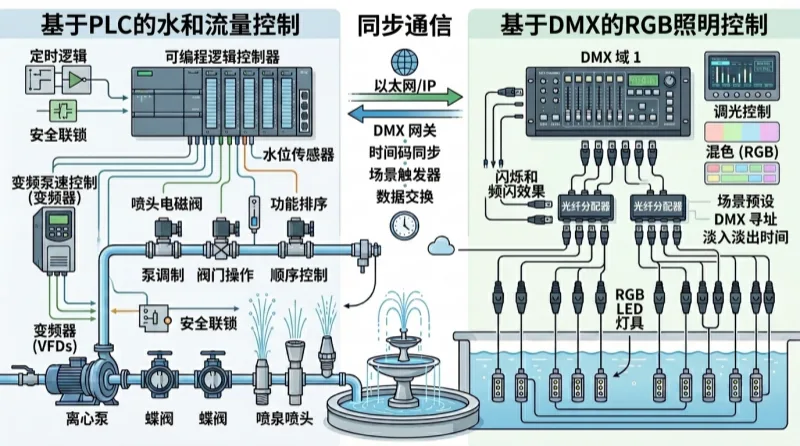
- Responsibilities of the PLC: It consists of a central processing unit (CPU), input/output modules, a power supply module, and communication interfaces. Using programming languages such as ladder diagrams, it precisely controls the start/stop, sequential operations, and timing of equipment such as water pumps and solenoid valves. Its core advantages are high reliability and strong resistance to interference, making it suitable for large-scale fountain systems requiring long-term continuous operation.
- DMX's Responsibilities: The DMX512 protocol supports up to 512 independent control channels, each of which can control a light fixture’s brightness, color, or flash frequency. It typically uses a mixture of the three RGB primary colors to produce any color and employs PWM (Pulse Width Modulation) to achieve smooth transitions in brightness. Its core advantages are flexible lighting control and compatibility with the vast majority of professional lighting fixtures on the market.
- Why must the two work together: When handling large-scale musical fountain projects, a PLC alone cannot achieve real-time synchronization of lighting with music; DMX, on the other hand, places high demands on communication lines, and signals are prone to attenuation over long distances, making it difficult to independently control device logic. Combining the two effectively compensates for each other’s shortcomings.
How can PLC and DMX be connected so they work together?
The hardware configuration directly determines the system's stability and future scalability.
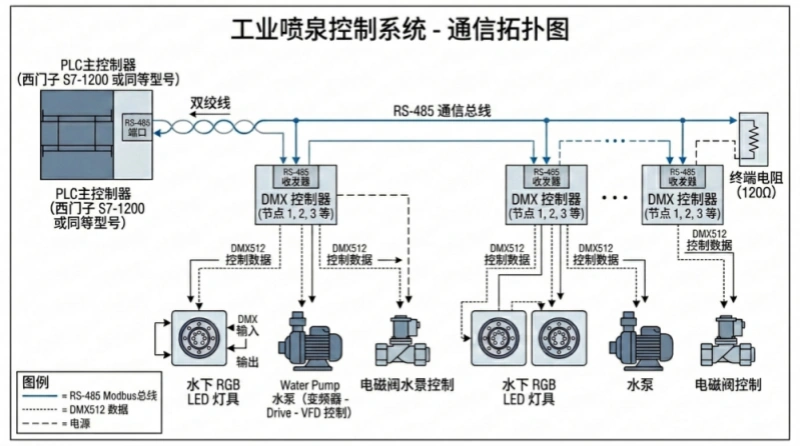
- Communication Interface Selection: The RS-485 interface is the preferred solution for fountain projects due to its strong resistance to interference, long transmission distance, support for multipoint communication, and high compatibility with DMX’s differential signal transmission mechanism; For small-scale projects with centralized equipment, Ethernet interfaces offer higher data transfer rates and greater network scalability, making them potentially more cost-effective; USB interfaces are low-cost but have limited transmission distances and are not suitable for the decentralized layouts typical of large-scale projects.
- Connection Topology: The point-to-point topology is simple and suitable for small-scale projects, but it requires a large amount of cabling and has poor scalability; A bus topology connects all nodes via a single shared line; it requires less cabling and supports multipoint communication, making it the mainstream choice for medium- to large-scale projects. However, it carries the risk of single-point failures, which must be mitigated through a redundant design; a star topology uses a central hub for connections, offering higher reliability and easier maintenance, but involves relatively higher cabling costs. Large-scale projects typically employ a hybrid topology that combines the advantages of both bus and star topologies.
How is data synchronized in real time between the dual-control systems?
Once the hardware is connected, the coordination mechanisms at the software level are what ultimately determine the accuracy of synchronization.
- Data Exchange Protocol: The Modbus RTU protocol uses a master-slave communication model and facilitates data exchange through register mapping, making it suitable for projects with high real-time requirements; the OPC UA protocol, with its service-oriented architecture and enhanced data modeling capabilities, is well-suited for more complex control scenarios in large-scale projects. When integrating multi-brand devices, the use of standardized protocols combined with CRC checks and retransmission mechanisms can effectively reduce data errors caused by signal interference.
- Control Strategy: Time-series-based control involves coordinating the operation of fountain equipment and lighting effects according to a predefined timeline. This approach is suitable for musical fountains, which require strict synchronization, but it demands high precision in time synchronization and typically requires a high-precision clock synchronization mechanism. Event-triggered control, on the other hand, responds dynamically based on real-time conditions (such as user touch or sound signals) and is better suited for interactive fountains, which place higher demands on system real-time performance and stability. Most large-scale projects employ a hybrid approach combining both strategies.
What problems are commonly encountered when using a dual-control system? How can they be resolved?
Communication latency and device compatibility are the two most common issues encountered during the implementation phase of dual-control systems.
- Communication Latency Issues: Time delays during data transmission can cause lighting changes to lag behind the movement of the water jets, disrupting the coordination of the performance. Network congestion, signal interference, or insufficient hardware performance can all exacerbate these delays. Solutions include adopting a time-slicing multitasking scheduling mechanism to improve the transmission efficiency of critical commands, selecting high-speed interfaces such as RS-485 or deploying fiber-optic networks, and introducing redundant communication links that automatically switch to a backup line in the event of a primary link failure.
- System Compatibility Issues: Technical specifications, communication protocols, and interface standards may vary among different brands of PLCs and DMX devices, which can lead to data transmission errors or lost commands. The solution is to refer to internationally recognized protocols such as DMX512 and IEC 61131-3, as well as industrial control standards, to establish unified technical guidelines. During the equipment selection phase, it is essential to strengthen testing for hardware interface compatibility, communication protocol consistency, and functional integration testing, while also establishing equipment profiles to accumulate experience in the selection process.
How well do dual-control systems work together in actual projects?
Based on the application of typical large-scale musical fountain projects in the industry, the improvements achieved through the use of a dual-control system are evident in three areas (the following examples are based on typical industry scenarios; specific values vary depending on project scale and equipment configuration and do not represent actual measurement data from any single project).
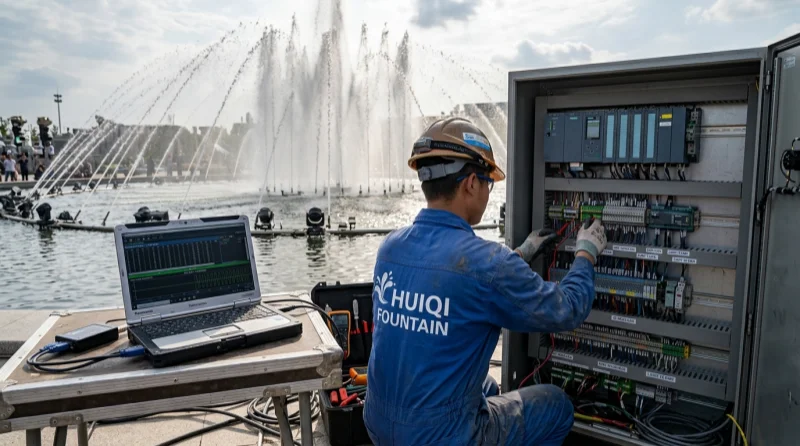
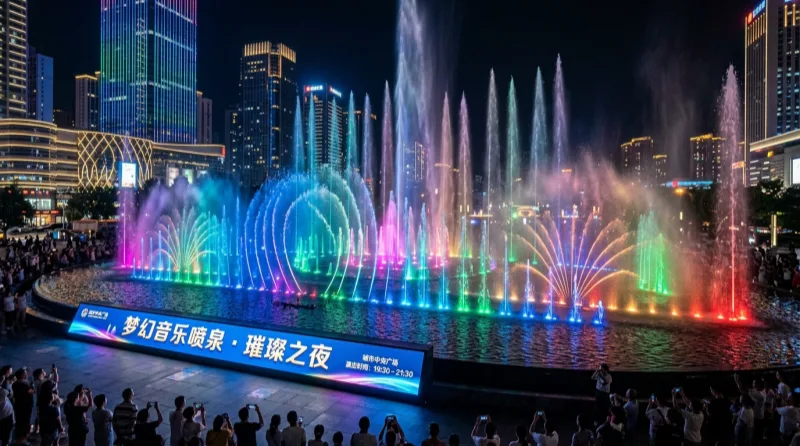
- Performance Effects: The PLC's precise logic control allows the fountain system to respond accurately to changes in musical rhythm, creating complex, multi-layered water patterns, while DMX adds visual depth to the performance through flexible lighting control. Together, these two technologies ensure that the water jets and lighting work in perfect harmony.
- Energy Consumption Optimization: The PLC can dynamically adjust the operating frequency of the water pumps based on real-time load conditions, while DMX reduces unnecessary lighting energy consumption through intelligent dimming. Case studies of typical large-scale projects in the industry show that, compared to traditional single-control systems, the dual-control system can improve overall energy efficiency by approximately 25%; specific figures must be evaluated based on actual equipment configurations.
- Improved Stability: The combination of the PLC’s immunity to interference and the standardized DMX communication protocol can effectively reduce the likelihood of system failures and lower the risk of system-wide downtime caused by a single point of failure, which is particularly important for urban plaza projects that require long-term, continuous operation.
Frequently Asked Questions (FAQ)
Q1: What is the relationship between PLC and DMX? Is it a relationship of substitution or one of complementarity?
They work in tandem, not as substitutes for one another. The PLC handles the logic control of the fountain equipment itself (pumps, solenoid valves, etc.), while DMX is responsible for the lighting effects. The two systems have distinct roles, and professional, large-scale musical fountain projects typically use both systems simultaneously.
Q2: Is it necessary to use both a PLC and DMX for a fountain project?
Not all projects require it. For simple fountain design projects, a single PLC may be sufficient; however, if a project requires tight synchronization between lighting and music to create rich visual effects, DMX is virtually indispensable, and the combination of the two is the standard solution for large-scale musical fountains.
Q3: What is the approximate magnitude of communication latency between the PLC and DMX? How can we prevent this from affecting the performance?
The magnitude of latency depends on the communication interface, network architecture, and device performance; there is no standard value. Common approaches to reducing latency include using high-speed interfaces such as RS-485, optimizing the transmission scheduling mechanisms of communication protocols, and designing redundant links to prevent interruptions caused by single points of failure.
Q4: Can PLCs and DMX devices from different brands be used together?
They can be used together, but you must ensure compatibility between communication protocols and interface standards. We recommend prioritizing devices that support internationally recognized standards such as DMX512 and Modbus RTU, and conducting interface compatibility testing and functional integration testing during the selection phase to prevent data transmission errors later on.
Q5: How much more energy does a dual-control system save compared to a single-control system?
The specific energy savings vary depending on project scale and equipment configuration. Based on typical large-scale industry projects, energy efficiency improvements of approximately 251 TP3T have been observed, primarily resulting from the synergistic optimization of two aspects: PLC-based dynamic adjustment of pump operating frequencies and DMX intelligent dimming. Specific figures must be evaluated based on the actual implementation plan.
Huiqi Fountain
The company’s custom music fountain system uses a dual-control solution combining PLC and DMX512 to achieve precise synchronization between water patterns, lighting, and music, with a maximum jet height of 30 meters.
If you are planning a control system solution for a musical fountain project, please feel free to contact our engineering team for technical advice and a quote.
Phone number:18818738142
 Chinese
 English