

◆ Direct Answer
The five most common pitfalls when selecting a fountain manufacturer are, in order: falsified or exaggerated qualifications; substandard equipment (using lower-grade materials); quotes that omit , additional charges imposed later, vague contract terms that make it impossible to enforce your rights, and poor after-sales response or the manufacturer becoming completely unreachable. These five pitfalls run through nearly all four stages—selecting a manufacturer, signing the contract, construction and acceptance, and post-construction maintenance—and each can result in irreparable losses.
Introduction
Fountain projects are not standardized products; every step—from design and equipment configuration to on-site construction and post-installation maintenance—relies heavily on the manufacturer’s actual capabilities and integrity. However, the reality is that entry barriers in the fountain industry vary widely, with manufacturers ranging from small workshops with just a few employees to professional companies with comprehensive R&D and manufacturing systems. If you choose the wrong one, the consequences can range from results falling short of expectations to equipment experiencing frequent breakdowns within a year or two, with no one available for after-sales support and your money going down the drain. Understanding these five common pitfalls in advance is the most valuable investment of judgment a buyer can make before signing a contract.
Pitfall 1: Falsified or Exaggerated Qualifications—How Can You Verify a Manufacturer’s Authentic Qualifications?
⚠ Common Scenarios
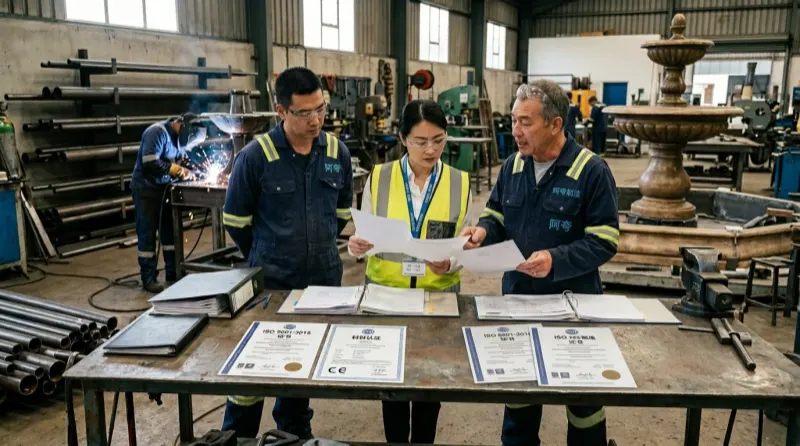
The certificates, case studies, and specifications displayed by manufacturers cannot be verified, or their qualifications are severely exaggerated. This is one of the most easily overlooked yet far-reaching pitfalls when selecting a fountain manufacturer. Some small manufacturers list a large number of certificates and project images that appear highly professional in their promotional materials, but in reality, these credentials may be expired, borrowed, or even outright forged; and the so-called “projects” are often just images stolen from the internet that have no connection to the company whatsoever.
- How to Verify: Request that the manufacturer provide the original business license and verify the registration date, scope of business, and company status yourself on the National Enterprise Credit Information Publicity System (www.gsxt.gov.cn). For ISO, CE, and other certification certificates, request the certificate numbers and log in directly to the certification body’s official website to verify their validity.
- Case Verification: Request specific, named examples of past projects (including project names, locations, and client contact information), and proactively contact the clients to inquire about the actual construction and usage conditions. Manufacturers with genuine capabilities will not refuse this request.
- On-site Inspection: Whenever possible, visit the factory in person to inspect the production lines, equipment inventory, and engineering team. This is the most direct way to verify the company’s capabilities; small, workshop-style factories find it difficult to masquerade as large-scale manufacturing enterprises.
Pitfall 2: Substandard Equipment—How Can You Tell If the Materials Are Inferior?
⚠ Common Scenarios
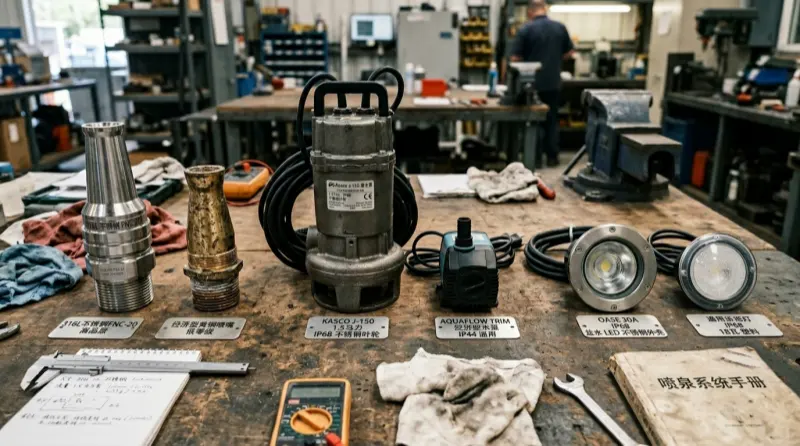
The bid contained vague descriptions of the equipment, and the materials of the equipment actually delivered did not match the commitments made in the bid. This issue is extremely difficult to detect, because there is virtually no visible difference in the appearance of the spray heads, water pumps, and lighting fixtures during the initial installation phase; problems usually don’t surface until one or two years of use—such as corrosion and perforation of spray heads, water ingress and discoloration of lighting fixtures, and frequent abnormal noises from water pumps. By this time, the contractor has long since received final payment, making it extremely difficult to seek redress.
- Verification of Nozzle Material: In the chlorinated water environment of public fountains, the industry standard is 316L stainless steel, which is approximately 3 to 5 times more resistant to chloride ion corrosion than 304 stainless steel (with slight variations depending on testing conditions). Ensure that the contract explicitly specifies the material and model of the nozzles. If the contract simply states “stainless steel nozzles” without specifying 316L or 304, be sure to request a clarification when signing the contract.
- Verification of Lighting Fixture Water Resistance Ratings: The contract must specify the IP rating of the LED lighting fixtures (IP68 is required for long-term underwater use) and their brand and model. There is a significant difference in water resistance between IP65 and IP68, although their appearances are nearly identical.
- Verification of Pump Brands: The quotation must specify the pump brands and models, and each item must be verified against the list upon receipt of the equipment to prevent substitutions with “equivalent models.”
Pitfall 3: Omissions in the Quote That Lead to Later Additional Charges—How to Spot the “Low-Price Bait” Trap?
⚠ Common Scenarios
Initial quotes are deliberately kept low, and additional charges are added during construction under various pretexts, resulting in actual expenses that far exceed the budget. This is the most common pitfall in the fountain industry. Some manufacturers will deliberately omit civil engineering, pipeline modifications, commissioning fees, shipping costs, or certain key equipment from their initial quotes to make the total price appear 【very affordable】 and secure the contract, only to later demand additional payments during construction under pretexts such as 【site conditions differing from expectations】 or 【client-requested upgrades】.
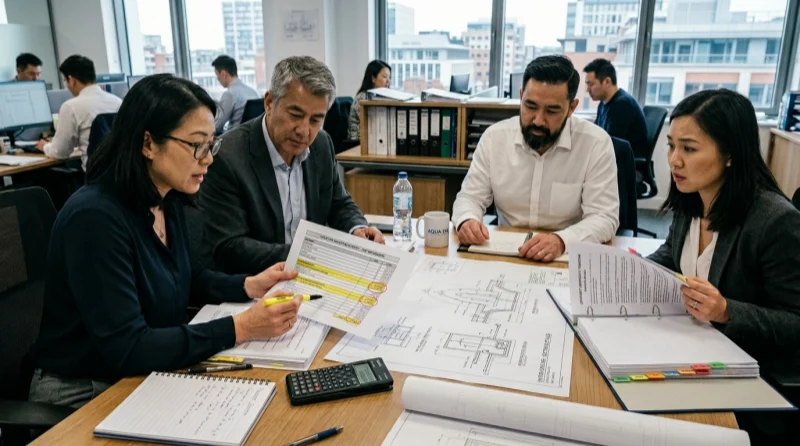
- Warning signs: The quote includes only a vague total price without a detailed list of equipment; costs for civil engineering, shipping, and commissioning are unclear or omitted; the quotation period is extremely short, and a price is quoted without conducting a site survey.
- Preventive Measures: Require that the quotation include a complete list of equipment and a detailed breakdown of service fees, and clearly stipulate in the contract that [except in cases of force majeure, no additional charges may be incurred within the scope of the contract].
- Benchmark Pricing: For fountain projects of the same scale, if a vendor’s quote is significantly lower than those of other manufacturers by 20% or more, carefully analyze the reasons for the discrepancy first.
Pitfall 4: Vague Contract Terms—Which Terms Are Most Likely to Become Blind Spots in Asserting Your Rights?
⚠ Common Scenarios
Because the contract's acceptance criteria are vague and the warranty provisions are ambiguous, when problems arise, both parties stick to their own versions of the story, making it impossible to enforce one's rights.
- The acceptance criteria must be clearly specified, including specific metrics such as spray height, water display effects, lighting functions, and music synchronization accuracy.
- Warranty Terms Details: The warranty period, scope, and response time must be clearly specified.
- Payment Milestones Linked to Delivery Milestones: It is recommended that the final payment be made after the project has been accepted.
Pitfall 5: Poor After-Sales Response or Complete Lack of Communication—How Can You Assess a Company’s After-Sales Capabilities Before Signing a Contract?
⚠ Common Scenarios
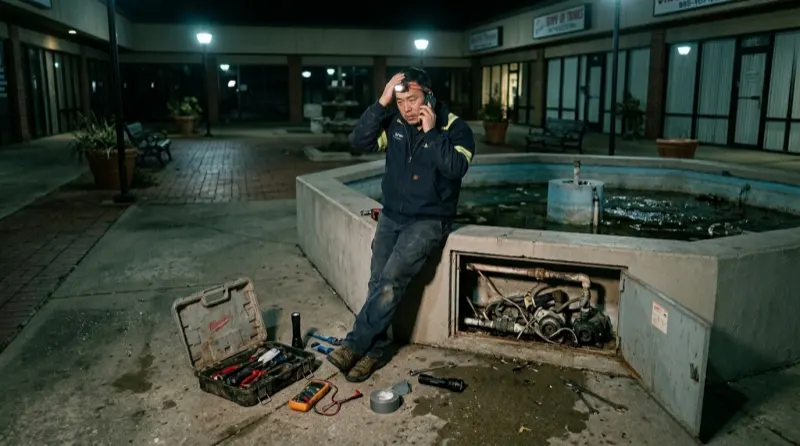
After project acceptance, the manufacturer’s response time has slowed significantly, or it is impossible to reach the after-sales manager directly when equipment issues arise.
- Test response times before signing the contract: Proactively test the after-sales service by phone or email.
- Require the designation of an after-sales service representative: Include this in the contract.
- Verify the manufacturer's ability to continue operations: Check the Enterprise Credit Information Disclosure System.
Frequently Asked Questions (FAQ)
Q1: What is the most important criterion when selecting a fountain manufacturer?
What matters most are verifiable, real-life examples.
Q2: When signing a fountain contract, which clauses must be clearly specified?
List of equipment brands and models, acceptance criteria, warranty terms, and payment milestones.
Q3: Is it normal for a quote to include only the total price?
That's not right; we need a breakdown.
Q4: How can you assess a manufacturer’s capabilities?
Factory Inspections + Case Verification + Corporate Credit System.
Q5: What determines whether you can assert your rights?
It depends on whether the contract specifies the materials and standards.
Huiqi Fountain
With 18 years of expertise in the R&D, manufacturing, and engineering services for fountain equipment, all quotes include a complete list of equipment along with brand and model details, and we have served fountain projects in more than 50 countries worldwide.
If you are comparing fountain manufacturers or evaluating existing proposals, please feel free to contact our engineering team for professional advice.
Phone number:18818738142
 Chinese
  English